每週英文練習句:When in Rome do as the Romans do 入境隨俗


0:00In this American English pronunciation video, we're going to go over the pronunciation of
0:04the word 'university'.
0:13This week's Word of the Week is 'university'. 'University' is a five-syllable word with
0:19secondary stress on the first syllable, and primary stress on the third syllable. U-ni-ver-si-ty.
0:29University. It begins with the 'ju' diphthong, uni-, uni-. Then we have the N consonant sound
0:38and the schwa in the second syllable, which is unstressed. So, the tongue tip will go
0:42to the roof of the mouth for the N, uni-, uni-. Then we have the stressed syllable -ver-.
0:51It begins with the V consonant sound, so the bottom lip will come and make contact with
0:56the bottom of the top front teeth, vv, vv. Univer-. The vowel sound is the UR as in HER
1:06vowel, -ver-, -ver-, so you don't need much jaw drop for that. The tongue will pull back,
1:12and make contact here with the roof of the mouth, or the insides of the teeth. Univer-sity.
1:20Then we have two unstressed syllables that will be flat, lower in pitch and volume, -sity,
1:26sity. I want to point out, we have a T here between two vowel sounds. That means it's
1:31going to be a flap, not a True T, -sity, -sity, -sity. University. University.
1:39He teaches at New York University.
1:43That's it, your Word of the Week. Try it out yourself. Make up a sentence with the
1:50word, record it, and post it as a video response to this video on YouTube. I can't wait to
1:55watch it.
1:57That's it, and thanks so much for using Rachel's English.

常用英文 發表在 痞客邦 留言(0) 人氣()


0:00In this American English pronunciation video, we're going to go over pronunciation of the
0:05word 'yesterday'.
0:13This week's Word of the Week is 'yesterday'. This is a three-syllable word with stress
0:19on the first syllable. Yesterday, yesterday. It begins with the Y consonant sound, yy,
0:28yy, where the front part of the tongue raises and touches the roof of the mouth here, yy.
0:34The tongue tip stays down. Many Spanish speakers will want to say jj, jj, and make a jj sound
0:41instead, with the tip of the tongue up. We want to keep the tip of the tongue down. Ye-,
0:46ye-, ye-. Then we have the EH as in BED vowel. So, the jaw does need to drop for that. Ye-,
0:55ye-. The syllable ends with the ST consonant cluster. Yest-, st, st, and then we have the
1:04schwa/R sound. Yester-, yester-, er, er, er. It's unstressed, so it's going to be lower
1:11in pitch, a little quieter, yester-, er. A lot of people will want to make this just
1:16an 'uh' sound. Yest-uh, yest-uh. That's not right. To get the R sound, make sure your
1:22tongue pulls back and up into that position. Yester-, yester-. And finally, -day. The D
1:29consonant sound, and the AY as in SAY diphthong. Make sure you drop your jaw for the first
1:35half of that diphthong. Da-, day, day. Yesterday. I got it yesterday.
1:45That's it, your Word of the Week. Try it out yourself. Make up a sentence with the
1:51word, record it, and post it as a video response to this video on YouTube. I can't wait to
1:57watch it.
1:59That's it, and thanks so much for using Rachel's English.
 
Back to >  實用英文矯正發音-利用YOUTUBE影片快速矯正英文發音
 相關教學影片來源 :請大家支持 http://www.rachelsenglish.com/   Rachel's English
延伸關鍵字:
 學習英文的正確步驟適合學習英文的卡通/動畫片英文書籍常聽簡單英文歌國小畢業必需學會的300英文單字

常用英文 發表在 痞客邦 留言(0) 人氣()


0:00In this American English pronunciation video, we're going to go over the pronunciation of
0:05the word 'very'.
0:14This week's Word of the Week is 'very'. 'Very' is a two-syllable word with stress on the
0:20first syllable. Ver-y, ver-y, very, very. It begins with the V consonant sound. If you
0:31come from India, look out. You might want to make it a [w], ww, where your lips round.
0:36But it's a V, vv, where the bottom lip comes up and makes contact with the top teeth. Vv,
0:43vv, ve-. Then we have the EH as in BED vowel. The jaw needs to drop for that. Ve-, ve-.
0:51Next we have the R consonant. That can be tough. And in this word a lot of people will
0:56want to flap the R, where the front part of the tongue bounces off the roof of the mouth.
1:01We do not want this position. We want this position, where the middle part of the tongue
1:05stretches up and touches the roof of the mouth, about here. Ver-. The front part of the tongue
1:12doesn't touch anything, and you should be able to hold out that sound. Very. And finally,
1:19the EE as in SHE vowel, unstressed, to finish the word. Very, very. I'm very sorry.
1:29That's it, your Word of the Week. Try it out yourself. Make up a sentence with
1:36the word, record it, and post it as a video response to this video on YouTube. I can't
1:42wait to watch it.
1:43That's it, and thanks so much for using Rachel's English.

常用英文 發表在 痞客邦 留言(0) 人氣()


常用英文 發表在 痞客邦 留言(0) 人氣()


0:00In this American English pronunciation video, we're going to go over the pronunciation of
0:05the word 'probably'.
0:13This week's Word of the Week is 'probably'. 'Probably' is a three-syllable word, but some
0:19people will reduce it to two syllables. The first syllable is stressed. We begin with
0:25the PR consonant cluster, pr-, pr-. So the lips are together for the P, but the tongue
0:30can already be in position for the R. Pr-, pr-, pro-. The first vowel is the AH as in
0:38FATHER sound. The jaw does need to drop for that: pro-, pro-. The second syllable, unstressed,
0:45proba-, -ba-, is the B consonant, where the lips come together, and the schwa sound. Proba-,
0:53proba-. And the last syllable, the B consonant, and then the LY ending. Proba-bly, -bly. So
1:01the lips come together for the B, and the tongue tip comes up here for the L, -bl-,
1:06-bl-. And then we have the EE as in SHE vowel. Probably, probably.
1:13As I said, some people will reduce this to two syllables, so you might here pro-bly,
1:18-bly, without the middle syllable. Prob-ly, prob-ly. And sometimes you'll hear it without
1:25the B at all: 'prolly', 'prolly', 'prolly'. Both of these reductions are used a lot.
1:33For example: prob-ly: I'll probably be there. Prob-ly, prob-ly.
1:38Or, 'prolly', 'prolly'. I'll probably forget. 'Prolly', 'prolly'.
1:44That's it, your Word of the Week. Try it out yourself. Make up a sentence with the
1:51word, record it, and post it as a video response to this video on YouTube. I can't wait to
1:57watch it.
1:58That's it, and thanks so much for using Rachel's English.

常用英文 發表在 痞客邦 留言(0) 人氣()


0:00In this American English pronunciation video, we're going to go over the pronunciation of
0:05the word 'probably'.
0:13This week's Word of the Week is 'probably'. 'Probably' is a three-syllable word, but some
0:19people will reduce it to two syllables. The first syllable is stressed. We begin with
0:25the PR consonant cluster, pr-, pr-. So the lips are together for the P, but the tongue
0:30can already be in position for the R. Pr-, pr-, pro-. The first vowel is the AH as in
0:38FATHER sound. The jaw does need to drop for that: pro-, pro-. The second syllable, unstressed,
0:45proba-, -ba-, is the B consonant, where the lips come together, and the schwa sound. Proba-,
0:53proba-. And the last syllable, the B consonant, and then the LY ending. Proba-bly, -bly. So
1:01the lips come together for the B, and the tongue tip comes up here for the L, -bl-,
1:06-bl-. And then we have the EE as in SHE vowel. Probably, probably.
1:13As I said, some people will reduce this to two syllables, so you might here pro-bly,
1:18-bly, without the middle syllable. Prob-ly, prob-ly. And sometimes you'll hear it without
1:25the B at all: 'prolly', 'prolly', 'prolly'. Both of these reductions are used a lot.
1:33For example: prob-ly: I'll probably be there. Prob-ly, prob-ly.
1:38Or, 'prolly', 'prolly'. I'll probably forget. 'Prolly', 'prolly'.
1:44That's it, your Word of the Week. Try it out yourself. Make up a sentence with the
1:51word, record it, and post it as a video response to this video on YouTube. I can't wait to
1:57watch it.
1:58That's it, and thanks so much for using Rachel's English.

常用英文 發表在 痞客邦 留言(0) 人氣()


常用英文 發表在 痞客邦 留言(0) 人氣()


Short Film 'The Restaurant Couple'.A slice of life... a restaurant conversation gets out of hand.

常用英文 發表在 痞客邦 留言(0) 人氣()


 I...know...
I know you...how about we say, "Be quiet!"

常用英文 發表在 痞客邦 留言(0) 人氣()


      在台灣學英文閱讀總是有個很大的盲點,就是不夠生活化,一般英文童話故事跟英文小說,除非是你有興趣或者有一定英文程度才能讀的下去,我一直在想,為什麼我們的英文課本文章,一定要弄的文謅謅,一點生活化跟可以應用的感覺都沒有,難怪學了又忘~~~難到國外人講話跟寫文章也會這樣嗎?
事實上並沒有!

常用英文 發表在 痞客邦 留言(0) 人氣()

生活充滿著各種不同的機會,端看你有沒有做對選擇 
7 months after the wedding .....
Life is full of choices
Have you made the right one

常用英文 發表在 痞客邦 留言(0) 人氣()


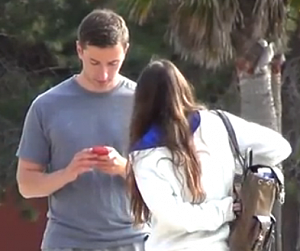
要如何快速要到型男的電話號碼呢?

Only one sentence ''Can i make a quick phone call?'' or "May I borrow your phone"
How To Get ANY Guy's Phone Number 

常用英文 發表在 痞客邦 留言(1) 人氣()

Blog Stats
⚠️

成人內容提醒

本部落格內容僅限年滿十八歲者瀏覽。
若您未滿十八歲,請立即離開。

已滿十八歲者,亦請勿將內容提供給未成年人士。