PIXNET Logo登入

「常用英文」你才不會忘記Blog-

跳到主文

英文單字 | 學習心得 |句子 | 字典 | 發音 | 電影 | 書籍 | 美劇 | 音樂 | 旅遊 | 遊戲 | 兒童美語 |免費英文學習

免費英文學習APP下載       常用英文LINE貼圖New!!                          徵求英文客座文章(Guest Post)


部落格全站分類:生活綜合

  • 相簿
  • 部落格
  • 留言
  • 名片
  • 9月 23 週一 201312:26
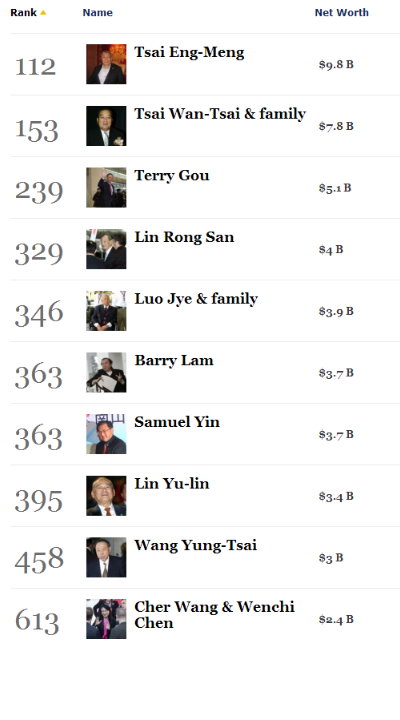
  • 台灣最有錢的人和世界首富- Taiwan's 10 Richest 2013~15

The richest in Taiwan
 富比世雜誌2015年全球富豪榜、台灣首富、世界首富、世界最有錢的人、台灣富豪、最新首富排行榜 ---
(繼續閱讀...)
文章標籤

常用英文 發表在 痞客邦 留言(0) 人氣(5,377)

  • 個人分類:看影片學英文系列
▲top
  • 9月 22 週日 201320:01
  • 世界首富的思維-退而不休


(繼續閱讀...)
文章標籤

常用英文 發表在 痞客邦 留言(0) 人氣(882)

  • 個人分類:看影片學英文系列
▲top
  • 9月 22 週日 201307:36
  • 世界首富的思維-至零方休的革新


I'm going to talk today about energy and climate.
And that might seem a bit surprising because
my full-time work at the Foundation is mostly about vaccines and seeds,
about the things that we need to invent and deliver
to help the poorest two billion live better lives.
But energy and climate are extremely important to these people --
in fact, more important than to anyone else on the planet.
The climate getting worse means that many years, their crops won't grow:
There will be too much rain, not enough rain,
things will change in ways
that their fragile environment simply can't support.
And that leads to starvation, it leads to uncertainty, it leads to unrest.
So, the climate changes will be terrible for them.
Also, the price of energy is very important to them.
In fact, if you could pick just one thing to lower the price of,
to reduce poverty, by far you would pick energy.
Now, the price of energy has come down over time.
Really advanced civilization is based on advances in energy.
The coal revolution fueled the Industrial Revolution,
and, even in the 1900s we've seen a very rapid decline in the price of electricity,
and that's why we have refrigerators, air-conditioning,
we can make modern materials and do so many things.
And so, we're in a wonderful situation with electricity in the rich world.
But, as we make it cheaper -- and let's go for making it twice as cheap --
we need to meet a new constraint,
and that constraint has to do with CO2.
CO2 is warming the planet,
and the equation on CO2 is actually a very straightforward one.
If you sum up the CO2 that gets emitted,
that leads to a temperature increase,
and that temperature increase leads to some very negative effects:
the effects on the weather; perhaps worse, the indirect effects,
in that the natural ecosystems can't adjust to these rapid changes,
and so you get ecosystem collapses.
Now, the exact amount of how you map
from a certain increase of CO2 to what temperature will be
and where the positive feedbacks are,
there's some uncertainty there, but not very much.
And there's certainly uncertainty about how bad those effects will be,
but they will be extremely bad.
I asked the top scientists on this several times:
Do we really have to get down to near zero?
Can't we just cut it in half or a quarter?
And the answer is that until we get near to zero,
the temperature will continue to rise.
And so that's a big challenge.
It's very different than saying "We're a twelve-foot-high truck trying to get under a ten-foot bridge,
and we can just sort of squeeze under."
This is something that has to get to zero.
Now, we put out a lot of carbon dioxide every year,
over 26 billion tons.
For each American, it's about 20 tons;
for people in poor countries, it's less than one ton.
It's an average of about five tons for everyone on the planet.
And, somehow, we have to make changes
that will bring that down to zero.
It's been constantly going up.
It's only various economic changes that have even flattened it at all,
so we have to go from rapidly rising
to falling, and falling all the way to zero.
This equation has four factors,
a little bit of multiplication:
So, you've got a thing on the left, CO2, that you want to get to zero,
and that's going to be based on the number of people,
the services each person's using on average,
the energy on average for each service,
and the CO2 being put out per unit of energy.
So, let's look at each one of these
and see how we can get this down to zero.
Probably, one of these numbers is going to have to get pretty near to zero.
Now that's back from high school algebra,
but let's take a look.
First, we've got population.
The world today has 6.8 billion people.
That's headed up to about nine billion.
Now, if we do a really great job on new vaccines,
health care, reproductive health services,
we could lower that by, perhaps, 10 or 15 percent,
but there we see an increase of about 1.3.
The second factor is the services we use.
This encompasses everything:
the food we eat, clothing, TV, heating.
These are very good things:
getting rid of poverty means providing these services
to almost everyone on the planet.
And it's a great thing for this number to go up.
In the rich world, perhaps the top one billion,
we probably could cut back and use less,
but every year, this number, on average, is going to go up,
and so, over all, that will more than double
the services delivered per person.
Here we have a very basic service:
Do you have lighting in your house to be able to read your homework?
And, in fact, these kids don't, so they're going out
and reading their school work under the street lamps.
Now, efficiency, E, the energy for each service,
here finally we have some good news.
We have something that's not going up.
Through various inventions and new ways of doing lighting,
through different types of cars, different ways of building buildings --
there are a lot of services where you can bring
the energy for that service down quite substantially.
Some individual services even bring it down by 90 percent.
There are other services like how we make fertilizer,
or how we do air transport,
where the rooms for improvement are far, far less.
And so, overall here, if we're optimistic,
we may get a reduction of a factor of three to even, perhaps, a factor of six.
But for these first three factors now,
we've gone from 26 billion to, at best, maybe 13 billion tons,
and that just won't cut it.
So let's look at this fourth factor --
this is going to be a key one --
and this is the amount of CO2 put out per each unit of energy.
And so the question is: Can you actually get that to zero?
If you burn coal, no.
If you burn natural gas, no.
Almost every way we make electricity today,
except for the emerging renewables and nuclear, puts out CO2.
And so, what we're going to have to do at a global scale,
is create a new system.
And so, we need energy miracles.
Now, when I use the term "miracle," I don't mean something that's impossible.
The microprocessor is a miracle. The personal computer is a miracle.
The Internet and its services are a miracle.
So, the people here have participated in the creation of many miracles.
Usually, we don't have a deadline,
where you have to get the miracle by a certain date.
Usually, you just kind of stand by, and some come along, some don't.
This is a case where we actually have to drive at full speed
and get a miracle in a pretty tight timeline.
Now, I thought, "How could I really capture this?
Is there some kind of natural illustration,
some demonstration that would grab people's imagination here?"
I thought back to a year ago when I brought mosquitos,
and somehow people enjoyed that.
(Laughter)
It really got them involved in the idea of,
you know, there are people who live with mosquitos.
So, with energy, all I could come up with is this.
I decided that releasing fireflies
would be my contribution to the environment here this year.
So here we have some natural fireflies.
I'm told they don't bite; in fact, they might not even leave that jar.
(Laughter)
Now, there's all sorts of gimmicky solutions like that one,
but they don't really add up to much.
We need solutions -- either one or several --
that have unbelievable scale
and unbelievable reliability,
and, although there's many directions people are seeking,
I really only see five that can achieve the big numbers.
I've left out tide, geothermal, fusion, biofuels.
Those may make some contribution,
and if they can do better than I expect, so much the better,
but my key point here
is that we're going to have to work on each of these five,
and we can't give up any of them because they look daunting,
because they all have significant challenges.
Let's look first at the burning fossil fuels,
either burning coal or burning natural gas.
What you need to do there, seems like it might be simple, but it's not,
and that's to take all the CO2, after you've burned it, going out the flue,
pressurize it, create a liquid, put it somewhere,
and hope it stays there.
Now we have some pilot things that do this at the 60 to 80 percent level,
but getting up to that full percentage, that will be very tricky,
and agreeing on where these CO2 quantities should be put will be hard,
but the toughest one here is this long-term issue.
Who's going to be sure?
Who's going to guarantee something that is literally billions of times larger
than any type of waste you think of in terms of nuclear or other things?
This is a lot of volume.
So that's a tough one.
Next would be nuclear.
It also has three big problems:
Cost, particularly in highly regulated countries, is high;
the issue of the safety, really feeling good about nothing could go wrong,
that, even though you have these human operators,
that the fuel doesn't get used for weapons.
And then what do you do with the waste?
And, although it's not very large, there are a lot of concerns about that.
People need to feel good about it.
So three very tough problems that might be solvable,
and so, should be worked on.
The last three of the five, I've grouped together.
These are what people often refer to as the renewable sources.
And they actually -- although it's great they don't require fuel --
they have some disadvantages.
One is that the density of energy gathered in these technologies
is dramatically less than a power plant.
This is energy farming, so you're talking about many square miles,
thousands of time more area than you think of as a normal energy plant.
Also, these are intermittent sources.
The sun doesn't shine all day, it doesn't shine every day,
and, likewise, the wind doesn't blow all the time.
And so, if you depend on these sources,
you have to have some way of getting the energy
during those time periods that it's not available.
So, we've got big cost challenges here,
we have transmission challenges:
for example, say this energy source is outside your country;
you not only need the technology,
but you have to deal with the risk of the energy coming from elsewhere.
And, finally, this storage problem.
And, to dimensionalize this, I went through and looked at
all the types of batteries that get made --
for cars, for computers, for phones, for flashlights, for everything --
and compared that to the amount of electrical energy the world uses,
and what I found is that all the batteries we make now
could store less than 10 minutes of all the energy.
And so, in fact, we need a big breakthrough here,
something that's going to be a factor of 100 better
than the approaches we have now.
It's not impossible, but it's not a very easy thing.
Now, this shows up when you try to get the intermittent source
to be above, say, 20 to 30 percent of what you're using.
If you're counting on it for 100 percent,
you need an incredible miracle battery.
Now, how we're going to go forward on this -- what's the right approach?
Is it a Manhattan Project? What's the thing that can get us there?
Well, we need lots of companies working on this, hundreds.
In each of these five paths, we need at least a hundred people.
And a lot of them, you'll look at and say, "They're crazy." That's good.
And, I think, here in the TED group,
we have many people who are already pursuing this.
Bill Gross has several companies, including one called eSolar
that has some great solar thermal technologies.
Vinod Khosla's investing in dozens of companies
that are doing great things and have interesting possibilities,
and I'm trying to help back that.
Nathan Myhrvold and I actually are backing a company
that, perhaps surprisingly, is actually taking the nuclear approach.
There are some innovations in nuclear: modular, liquid.
And innovation really stopped in this industry quite some ago,
so the idea that there's some good ideas laying around is not all that surprising.
The idea of TerraPower is that, instead of burning a part of uranium --
the one percent, which is the U235 --
we decided, "Let's burn the 99 percent, the U238."
It is kind of a crazy idea.
In fact, people had talked about it for a long time,
but they could never simulate properly whether it would work or not,
and so it's through the advent of modern supercomputers
that now you can simulate and see that, yes,
with the right material's approach, this looks like it would work.
And, because you're burning that 99 percent,
you have greatly improved cost profile.
You actually burn up the waste, and you can actually use as fuel
all the leftover waste from today's reactors.
So, instead of worrying about them, you just take that. It's a great thing.
It breathes this uranium as it goes along, so it's kind of like a candle.
You can see it's a log there, often referred to as a traveling wave reactor.
In terms of fuel, this really solves the problem.
I've got a picture here of a place in Kentucky.
This is the leftover, the 99 percent,
where they've taken out the part they burn now,
so it's called depleted uranium.
That would power the U.S. for hundreds of years.
And, simply by filtering seawater in an inexpensive process,
you'd have enough fuel for the entire lifetime of the rest of the planet.
So, you know, it's got lots of challenges ahead,
but it is an example of the many hundreds and hundreds of ideas
that we need to move forward.
So let's think: How should we measure ourselves?
What should our report card look like?
Well, let's go out to where we really need to get,
and then look at the intermediate.
For 2050, you've heard many people talk about this 80 percent reduction.
That really is very important, that we get there.
And that 20 percent will be used up by things going on in poor countries,
still some agriculture,
hopefully we will have cleaned up forestry, cement.
So, to get to that 80 percent,
the developed countries, including countries like China,
will have had to switch their electricity generation altogether.
So, the other grade is: Are we deploying this zero-emission technology,
have we deployed it in all the developed countries
and we're in the process of getting it elsewhere?
That's super important.
That's a key element of making that report card.
So, backing up from there, what should the 2020 report card look like?
Well, again, it should have the two elements.
We should go through these efficiency measures to start getting reductions:
The less we emit, the less that sum will be of CO2,
and, therefore, the less the temperature.
But in some ways, the grade we get there,
doing things that don't get us all the way to the big reductions,
is only equally, or maybe even slightly less, important than the other,
which is the piece of innovation on these breakthroughs.
These breakthroughs, we need to move those at full speed,
and we can measure that in terms of companies,
pilot projects, regulatory things that have been changed.
There's a lot of great books that have been written about this.
The Al Gore book, "Our Choice"
and the David McKay book, "Sustainable Energy Without the Hot Air."
They really go through it and create a framework
that this can be discussed broadly,
because we need broad backing for this.
There's a lot that has to come together.
So this is a wish.
It's a very concrete wish that we invent this technology.
If you gave me only one wish for the next 50 years --
I could pick who's president,
I could pick a vaccine, which is something I love,
or I could pick that this thing
that's half the cost with no CO2 gets invented --
this is the wish I would pick.
This is the one with the greatest impact.
If we don't get this wish,
the division between the people who think short term and long term will be terrible,
between the U.S. and China, between poor countries and rich,
and most of all the lives of those two billion will be far worse.
So, what do we have to do?
What am I appealing to you to step forward and drive?
We need to go for more research funding.
When countries get together in places like Copenhagen,
they shouldn't just discuss the CO2.
They should discuss this innovation agenda,
and you'd be stunned at the ridiculously low levels of spending
on these innovative approaches.
We do need the market incentives -- CO2 tax, cap and trade --
something that gets that price signal out there.
We need to get the message out.
We need to have this dialogue be a more rational, more understandable dialogue,
including the steps that the government takes.
This is an important wish, but it is one I think we can achieve.
Thank you.
(Applause)
Thank you.
Chris Anderson: Thank you. Thank you.
(Applause)
Thank you. So to understand more about TerraPower, right --
I mean, first of all, can you give a sense of what scale of investment this is?
Bil Gates: To actually do the software, buy the supercomputer,
hire all the great scientists, which we've done,
that's only tens of millions,
and even once we test our materials out in a Russian reactor
to make sure that our materials work properly,
then you'll only be up in the hundreds of millions.
The tough thing is building the pilot reactor;
finding the several billion, finding the regulator, the location
that will actually build the first one of these.
Once you get the first one built, if it works as advertised,
then it's just clear as day, because the economics, the energy density,
are so different than nuclear as we know it.
CA: And so, to understand it right, this involves building deep into the ground
almost like a vertical kind of column of nuclear fuel,
of this sort of spent uranium,
and then the process starts at the top and kind of works down?
BG: That's right. Today, you're always refueling the reactor,
so you have lots of people and lots of controls that can go wrong:
that thing where you're opening it up and moving things in and out,
that's not good.
So, if you have very cheap fuel that you can put 60 years in --
just think of it as a log --
put it down and not have those same complexities.
And it just sits there and burns for the 60 years, and then it's done.
CA: It's a nuclear power plant that is its own waste disposal solution.
BG: Yeah. Well, what happens with the waste,
you can let it sit there -- there's a lot less waste under this approach --
then you can actually take that,
and put it into another one and burn that.
And we start off actually by taking the waste that exists today,
that's sitting in these cooling pools or dry casking by reactors --
that's our fuel to begin with.
So, the thing that's been a problem from those reactors
is actually what gets fed into ours,
and you're reducing the volume of the waste quite dramatically
as you're going through this process.
CA: I mean, you're talking to different people around the world
about the possibilities here.
Where is there most interest in actually doing something with this?
BG: Well, we haven't picked a particular place,
and there's all these interesting disclosure rules about anything that's called "nuclear,"
so we've got a lot of interest,
that people from the company have been in Russia, India, China --
I've been back seeing the secretary of energy here,
talking about how this fits into the energy agenda.
So I'm optimistic. You know, the French and Japanese have done some work.
This is a variant on something that has been done.
It's an important advance, but it's like a fast reactor,
and a lot of countries have built them,
so anybody who's done a fast reactor is a candidate to be where the first one gets built.
CA: So, in your mind, timescale and likelihood
of actually taking something like this live?
BG: Well, we need -- for one of these high-scale, electro-generation things
that's very cheap,
we have 20 years to invent and then 20 years to deploy.
That's sort of the deadline that the environmental models
have shown us that we have to meet.
And, you know, TerraPower, if things go well -- which is wishing for a lot --
could easily meet that.
And there are, fortunately now, dozens of companies --
we need it to be hundreds --
who, likewise, if their science goes well,
if the funding for their pilot plants goes well,
that they can compete for this.
And it's best if multiple succeed,
because then you could use a mix of these things.
We certainly need one to succeed.
CA: In terms of big-scale possible game changes,
is this the biggest that you're aware of out there?
BG: An energy breakthrough is the most important thing.
It would have been, even without the environmental constraint,
but the environmental constraint just makes it so much greater.
In the nuclear space, there are other innovators.
You know, we don't know their work as well as we know this one,
but the modular people, that's a different approach.
There's a liquid-type reactor, which seems a little hard,
but maybe they say that about us.
And so, there are different ones,
but the beauty of this is a molecule of uranium
has a million times as much energy as a molecule of, say, coal,
and so -- if you can deal with the negatives,
which are essentially the radiation --
the footprint and cost, the potential,
in terms of effect on land and various things,
is almost in a class of its own.
CA: If this doesn't work, then what?
Do we have to start taking emergency measures
to try and keep the temperature of the earth stable?
BG: If you get into that situation,
it's like if you've been over-eating, and you're about to have a heart attack:
Then where do you go? You may need heart surgery or something.
There is a line of research on what's called geoengineering,
which are various techniques that would delay the heating
to buy us 20 or 30 years to get our act together.
Now, that's just an insurance policy.
You hope you don't need to do that.
Some people say you shouldn't even work on the insurance policy
because it might make you lazy,
that you'll keep eating because you know heart surgery will be there to save you.
I'm not sure that's wise, given the importance of the problem,
but there's now the geoengineering discussion
about -- should that be in the back pocket in case things happen faster,
or this innovation goes a lot slower than we expect?
CA: Climate skeptics: If you had a sentence or two to say to them,
how might you persuade them that they're wrong?
BG: Well, unfortunately, the skeptics come in different camps.
The ones who make scientific arguments are very few.
Are they saying that there's negative feedback effects
that have to do with clouds that offset things?
There are very, very few things that they can even say
there's a chance in a million of those things.
The main problem we have here, it's kind of like AIDS.
You make the mistake now, and you pay for it a lot later.
And so, when you have all sorts of urgent problems,
the idea of taking pain now that has to do with a gain later,
and a somewhat uncertain pain thing --
in fact, the IPCC report, that's not necessarily the worst case,
and there are people in the rich world who look at IPCC
and say, "OK, that isn't that big of a deal."
The fact is it's that uncertain part that should move us towards this.
But my dream here is that, if you can make it economic,
and meet the CO2 constraints,
then the skeptics say, "OK,
I don't care that it doesn't put out CO2,
I kind of wish it did put out CO2,
but I guess I'll accept it because it's cheaper than what's come before."
(Applause)
CA: And so, that would be your response to the Bjorn Lomborg argument,
that basically if you spend all this energy trying to solve the CO2 problem,
it's going to take away all your other goals
of trying to rid the world of poverty and malaria and so forth,
it's a stupid waste of the Earth's resources to put money towards that
when there are better things we can do.
BG: Well, the actual spending on the R&D piece --
say the U.S. should spend 10 billion a year more than it is right now --
it's not that dramatic.
It shouldn't take away from other things.
The thing you get into big money on, and this, reasonable people can disagree,
is when you have something that's non-economic and you're trying to fund that --
that, to me, mostly is a waste.
Unless you're very close and you're just funding the learning curve
and it's going to get very cheap,
I believe we should try more things that have a potential
to be far less expensive.
If the trade-off you get into is, "Let's make energy super expensive,"
then the rich can afford that.
I mean, all of us here could pay five times as much for our energy
and not change our lifestyle.
The disaster is for that two billion.
And even Lomborg has changed.
His shtick now is, "Why isn't the R&D getting more discussed?"
He's still, because of his earlier stuff,
still associated with the skeptic camp,
but he's realized that's a pretty lonely camp,
and so, he's making the R&D point.
And so there is a thread of something that I think is appropriate.
The R&D piece, it's crazy how little it's funded.
CA: Well Bill, I suspect I speak on the behalf of most people here
to say I really hope your wish comes true. Thank you so much.
BG: Thank you.
(繼續閱讀...)
文章標籤

常用英文 發表在 痞客邦 留言(0) 人氣(326)

  • 個人分類:看影片學英文系列
▲top
  • 9月 22 週日 201307:30
  • 世界首富的思維-我創造了微軟帝國


well microsoft was the first
software company where
rewrote software for personal computers and we believe
that we could hire the best engineers
there was a
unbelievable amount of software to be written
and
we could do it well we could do it on of global basis
uh... to
original
customer base
was the
hardware manufacturers
and resold
to literally hundreds and hundreds
uh... over a hundred companies in japan over a hundred companies doing
word processors in industrial control type things
we know in the long run we wanted to sell suffered directly to users
but we actually didn't get around that
till nineteen eighty
when we had uh... our first sort of deans and
uh...
uh... productivity software that
that people would go to a computer store in actually by the the software package
we actually
talked about it
unit article
and i think nineteen
seventy seven was the first time it appears in print
where we say a computer on it on every destin and every home
and actually did
pick we said running microsoft software
if we were just talking about the vision we'd leave
that those last three words out
uh... if we were
document internal company
discussion
we put those words and
and
it's very hard to
recall
crazy and wild that was you know on every desk and in every form
you know at the time you have
people who are very smart same
you know why would somebody needed computer or even ken olsen
who would run this company digital equipment
who made the computer i grew up with
and you know that we admired
both him and his company immensely
was saying that
this seemed kinda a silly idea
that people would want to have a computer
when
ibm
saw that we had written supper for all the personal computers
they came to us sought or advice on the design
but we said you should put it this can
and since they wanted to ship very quickly
another company
uh...
called digital research
had done that work
for the eight bit machines
and they were starting to do a version for this new these new sixteen machines
we commenced by the end of the sixteen bit machine
using this
eighty eighty six eighty d eight processor will be entered research
really hadn't finished the work
and that idea was getting frustrated because they're doing research
when sign even a non-disclosure agreement
and then some of us uh... particularly paul
and uh...
key person in kozhikode nishi
uh...
was from japan worked with us
said no no no we should just do that ourselves
and because of a quick timing
we end up licensee me original called from another company
uh...
and turned that into m_s_ toss
and
so then
subsequently m_s_ tossed competed with
this digital research cpm
uh... after about two or three years and messed osx
became far far more popular
uh... then
than cpm and then eventually we would
pecan ad
graphics capability on top of m_s_ toss
and then integrate the two together
and said today when we talk about windows
and actually include
although zen estilo slings in it that's the full operating system
alarm also you think of the graphics in windows and stuff there's a lot of
more classic operating system capability that that's built in there
they are the end initial bill is a flat fee deal uh... another flat the deal
it had certain restrictions
that prevented i_b_m_
from selling to other hardware makers
so people did
i_b_m_p_c_ compatible machines
we would get the revenue by doing business directly with those people
and that the deal was very complicated but it was a deal that
steve balmer who's a key person of the company by that time
and i thought a lot about
and it was that they really
junior team from i_b_m_ so we tried to make sure that given our belief that
personal computers would be hyper popular
that microsoft would get
a lot upside so
they felt they got a very good deal which they did
as the industry expanded
we uh...
for numbers and some for different machines we dot that opportunity even
though they did not pay so royalty
even in the early days of the set a computer on every desk every home and
you'd say okay how many homes are there on the world how many decir on the world
you know can i make twenty bucks for every home twenty bucks for every desk
if you get these big numbers
part of the beauty of the
hoping was
we were very focused on the here and now
should we hire one more person
ip our customers
didn't pay s
what we have enough cash to meet the payroll
we really were very practical about
that next thing and so involved in
the deep into the ring
that we didn't get ahead of ourselves we never thought
you know how big we'd be i remember
when uh... will your lead lists of wealthy people came out
and
uh... one of the intel founders was there
pic i ran wayne
computer section still
women still doing well and we thought within boy at the software business does
well
nevada microsoft could be
summer to that but it wasn't real focus state
the everyday activity of
doing great software
through a stand
decisions we made like the quality of the people the way we were very global
that vision of
uh...
uh... how we thought about software that was very long term
but you know other than those things you know we just came in to work every day
in
uh...
wrote more quote
you know hired
hired more people
it wasn't really until the idea of pc
succeeded and perhaps even into windows succeeded that
there was a broad awareness that microsoft
was very unique
as a software company that these other companies have been one product
companies
have heart
people could do a broad set of things didn't renew their accidents tend to
research
uh... so
and we've got your
doing something very unique but it was easily
i'm not until nineteen ninety five or even nineteen ninety-seven that
that there was this wide recognition that we
we where the company that had
had revolutionized software
when i was very young
had been exposed to computers so i was mostly just free team
doing math learning about science
and i wasn't sure what
my critique
i knew i loved
alarming about things i was an avid reader
but it was when i was twelve years old that i
i first got use a computer
actually a very
limited machine by today's standards uh... back but that
definitely fascinated me when i was first exposed
i was intrigued
uh... by figuring out what to do but couldn't do
and some friends of mine
lots of time uh... the teachers got intimidated so we were on our own
trying to figure it out actually gave
course on computers
uh... to the other students
and it became
you know a fascination where
uh... we
got paid for doing computer work and
talked about forming a accompany
uh... but
there was kind of a magical breakthrough in the computer
became
uh...
and
we could see that
everyone could afford a computer
uh... that was
much later
uh... but id
uh... that's what got us to
really get interim and create company for software
yet map was the thing that uh... k most natural to me
and
you need to make peace
exams some which were sort of nationwide exams and
uh... i did quite well almost
gave me some confidence and i had some
teachers were very christine
uh... they
let me read text books they encourage me to take
uh... college course on
symbolic math which is actually called
algebra
uh...
so i i felt
it pretty confident in my math skills which is a nice thing because
uh... not only the sciences but economics a lot of things
if you're
comfortable
uh... with math and statistics and
weighs in
looking at cause-and-effect
uh... that's extremely helpful
computers were immensely
expensive
uh... and cost millions of dollars a machine that
was far less powerful and
from what you have a m
a cell phone
today and so that
either you do
have a very
important application
or you to share the machine with other people and still you had to pay quite a
bit of money
and sometimes turns worrier connected up in and sharon machine
it's a lot better then
sending their programs and because you can see
when you make a mistake
uh... pretty quickly
even so because they charge is so much
we'd actually typed the programs
offline on a paper t
uh... so that we didn't
have any delay for typing
and then when we got onto the computer we'd feeding on that tape
uh... so that
that was less less time online
but it gave you a sense look at what you got right and wrong and you could try
and cracked things
uh... we also
because at that time the dominant form of computing misusing punch cards
we exceeded that quite a bit we're down
at the university of washington use some of those
punch card systems
as computers became less expensive so-called many computers
that more people had access mostly scientists and business people
but also we
managed to find
machines that were being used at night the idea of the machine is something
that an individual would use and that it would just sit there idle when they
weren't using them
dot only made sense
about a decade later
when the work that we and others have done
had gotten a the price down so dramatically
the idea of a computer sitting idle unit doesn't feel like some q_-two waste of
resources
alike
uh... it did when they were
so uh...
expensive and rare
i went through several phases of doing more complex programs
where people who were great programmers would look at my work give me feedback
on it
and
you get to you
you camille quite a good programmer
and it was kind of a such a
uh... intense activity
between the age of thirteen and seventeen
uh... that
you know we learned a allot
uh... densely welded
programs which were calm was
the idea of the scheduling of
uh... bar school when should the classes mean who should be what sections they
are all these requests
people who want different classes and
keeping them small and not having the teachers teach too many
classes around
very complex kind of software problem
inaction of the school first asked me to do it
uh... when i was fifteen
i said that i i didn't know how
an awsome adults to do it not
didn't work
uh...
and many
about a year later i'd figured out how to do it
and so my friends and i actually did the software
did all this high school scheduling uh... betrayed some fantastic
uh... benefits to us
and we got paid for doing it
it was exactly the kind of com complex problem that
now develop my skills very well
and you know we got
some degree of
control over
who is on our classes and
uh...
so you know it combined the best of everything
well my parents have been
fantastic
throughout
my whole student career mean getting me to go lakeside
uh... that
my senior at lakeside word one and two take time off and do this job it to your
w they've been very supportive about letting live down in vancouver
washington
i decided to show some a little bit
where and some of that
mike orchestra w so they should skip undergraduate school graduate school
and they were not do just about that
it looks like tight
would have an option you do that but i didn't i
i'd just went to harvard
and that was another case where they were right that in a socially demand
other undergraduates was good
i want to take graduate courses up at m_i_t_
and i did that too limited degree so i i kinda had the best of both worlds anyway
when it came time to be
uh... go on leave
from harvard
the policies of the school about if your garden
letting you come back work
credibly generous
and so
if he had a price it failed
then
and i would have been back into my parents
we're a little surprised
and kind of
wondering what it meant
uh... but they were pretty supportive
and in fact when we got into this legal dispute
uh... with per checked
you know my dad gave me good advice he was
supportive on on that
and so we saw that
through
and
you know that is the company became successful a
you know i hope they felt better about it
nearly all the really bad case was if it
if i stayed
and the company of was kinda mediocre lee successful that they'll that would
be okay if it
was a big success it would be okay maybe you know they could see i was
very energized and
i thought
in we needed to get in at the very beginning and not waste a year or two
which is what i have left of mine
uh... undergraduate course requirements
well i think the american dream is this kind of a global dream now that young
people
can come up with new ideas and
and create
companies that make a contribution not just jobs that whatever their
innovations that they bring about
no capitalism is this unbelievable open system that if you combine it with
uh... good infrastructure good education
their creativity
that we find
uh... for people who've had that those cancers
is always going to surprise us it's always going to come up with new seeds
new medicines and software
the movies you know things that are
or make the world a better place
microsoft
was at the center of the personal ck computer revolution in particularly
intimidate creation of a software market we went out to lots of companies and
courage them to write software
for different applications monday now applications
wild up occasions
that idea that
you would encourage people to be creative and build saw for maybe a whole
industry around that
uh... microsoft we didn't have no one else did
and so we got that going
and that's led now to where you have all these great choices and it just keeps
getting better and better ants because of the following the machines out there
it can be sold very very inexpensively sadat
all bootstrap getting the industry going
making a it personal making them be lots of software that's what we or the most
proud of
the foundation not started uh...
in the late nineties with my dad encouraging mean
uh... an executive named patty stone separate
uh... left microsoft
or helping out high was still
very busy
our kids were
uh... very young
uh... but we got going
put computers in libraries in many different countries including the united
states
we did some scholarship things
we were learning about
uh...
reproductive health and and population issues
and i kept growing
and we met people
though about back scenes and
sos
a part-time thing
a global health was a bit over half
uh... the u_s_ focused uh... library scholarship education work was over a
quarter
uh... that there was a final peace
relates to other things
the poorest other than just and health
uh... things things like
finance in savings
an eight in our group
then i saw that
uh... i could make
unique contribution aaron created to transition plan uh... that was
four years in the making
and so now im full-time at the time dation
and
plane rolled
being the chairman and
traveling a lot concerts you know it's equally challenging it's very fulfilling
it's taking this these resources on lucky enough to have because of the
success of microsoft
in giving those back to that the society
in a way that can have the biggest impact
(繼續閱讀...)
文章標籤

常用英文 發表在 痞客邦 留言(0) 人氣(118)

  • 個人分類:看影片學英文系列
▲top
  • 9月 22 週日 201307:19
  • 賈柏斯電影預告-蘋果電腦的誕生

Jobs_(film)

Steve! It takes guts to drop out like you did. Higher education comes at the expense of experience. Woz! What do you work out? It's a computer terminal that hooks up to the TV for the display. Steve? Whoa... These are state of the art. Nobody makes anything like this. Welcome to Apple computer. This is everything? Sort of... I think we should start with around 90 grand. - Could you repeat that? - If you'll have me aboard. Apple incorporate went public this morning. We got to make the small things unforgettable. - Typeface isn't a pressing issue. - Get out! He's trying to start a war with IBM! Steve has been doing the impossible ever since he was in a garage. I'm trying to build Apple and they're taking it away from me? If you keep heading down this path, I will not protect you. It's a blatant ripoff. I'm gonna sue you for every cent! You are your own worst enemy. The board is unanimous. Steve will no longer be involved in this company. Ten years after Steeve Jobs departure, the future of Apple computer is in jeopardy. In life, you only get to do so many things. I'm gonna make Apple cool again. Here is to the crazy ones. The misfits. The rebels. Because the people who are crazy enough to think they can change the world are the one who do. If we're gonna do this thing, we need to come up with a name. Apple That is so much better than Phaser-Beam Computers.
-----------
The story of Steve Jobs' ascension from college dropout into one of the most revered creative entrepreneurs of the 20th century.

The Movieclips Trailers channel is your destination for hot new trailers the second they drop. Whether they are blockbusters, indie films, or that new comedy you've been waiting for, the Movieclips Trailers team is there day and night to make sure all the hottest new movie trailers are available whenever you need them, as soon as you can get them. All the summer blockbusters, Man of Steel, Oblivion, Pacific Rim, After Earth, The Lone Ranger, Star Trek Into Darkness and more! They are all available on Movieclips Trailers.

In addition to hot new trailers, the Movieclips Trailers page gives you original content like Ultimate Trailers, Instant Trailer Reviews, Monthly Mashups, and Meg's Movie News and more to keep you up-to-date on what's out this week and what you should be watching.

movieclips "movie clips" movieclipstrailers "new trailers" "trailers HD" hd trailers movieclipsDOTcom trailer 2013 official HD zefr biography drama "steve jobs" apple computers college "ashton kutcher" "amanda crew" "j. k. simmons" "josh gad" "Joshua Michael Stern" "Dermot Mulroney" glasses entrepreneur company etimmons
(繼續閱讀...)
文章標籤

常用英文 發表在 痞客邦 留言(0) 人氣(303)

  • 個人分類:看影片學英文系列
▲top
  • 9月 21 週六 201321:29
  • 世界首富的思維-老師們需要真正的回饋


Everyone needs a coach.
It doesn't matter whether you're a basketball player,
a tennis player, a gymnast
or a bridge player.
(Laughter)
My bridge coach, Sharon Osberg,
says there are more pictures of the back of her head
than anyone else's in the world. (Laughter)
Sorry, Sharon. Here you go.
We all need people who will give us feedback.
That's how we improve.
Unfortunately, there's one group of people
who get almost no systematic feedback
to help them do their jobs better,
and these people
have one of the most important jobs in the world.
I'm talking about teachers.
When Melinda and I learned
how little useful feedback most teachers get,
we were blown away.
Until recently, over 98 percent of teachers
just got one word of feedback:
Satisfactory.
If all my bridge coach ever told me
was that I was "satisfactory,"
I would have no hope of ever getting better.
How would I know who was the best?
How would I know what I was doing differently?
Today, districts are revamping
the way they evaluate teachers,
but we still give them almost no feedback
that actually helps them improve their practice.
Our teachers deserve better.
The system we have today isn't fair to them.
It's not fair to students,
and it's putting America's global leadership at risk.
So today I want to talk about how we can help all teachers
get the tools for improvement they want and deserve.
Let's start by asking who's doing well.
Well, unfortunately there's no international ranking tables
for teacher feedback systems.
So I looked at the countries
whose students perform well academically,
and looked at what they're doing
to help their teachers improve.
Consider the rankings for reading proficiency.
The U.S. isn't number one.
We're not even in the top 10.
We're tied for 15th with Iceland and Poland.
Now, out of all the places
that do better than the U.S. in reading,
how many of them have a formal system
for helping teachers improve?
Eleven out of 14.
The U.S. is tied for 15th in reading,
but we're 23rd in science and 31st in math.
So there's really only one area where we're near the top,
and that's in failing to give our teachers
the help they need to develop their skills.
Let's look at the best academic performer:
the province of Shanghai, China.
Now, they rank number one across the board,
in reading, math and science,
and one of the keys to Shanghai's incredible success
is the way they help teachers keep improving.
They made sure that younger teachers
get a chance to watch master teachers at work.
They have weekly study groups,
where teachers get together and talk about what's working.
They even require each teacher to observe
and give feedback to their colleagues.
You might ask, why is a system like this so important?
It's because there's so much variation
in the teaching profession.
Some teachers are far more effective than others.
In fact, there are teachers throughout the country
who are helping their students make extraordinary gains.
If today's average teacher
could become as good as those teachers,
our students would be blowing away the rest of the world.
So we need a system that helps all our teachers
be as good as the best.
What would that system look like?
Well, to find out, our foundation
has been working with 3,000 teachers
in districts across the country
on a project called Measures of Effective Teaching.
We had observers watch videos
of teachers in the classroom
and rate how they did on a range of practices.
For example, did they ask their students
challenging questions?
Did they find multiple ways to explain an idea?
We also had students fill out surveys with questions like,
"Does your teacher know
when the class understands a lesson?"
"Do you learn to correct your mistakes?"
And what we found is very exciting.
First, the teachers who did well on these observations
had far better student outcomes.
So it tells us we're asking the right questions.
And second, teachers in the program told us
that these videos and these surveys from the students
were very helpful diagnostic tools,
because they pointed to specific places
where they can improve.
I want to show you what this video component of MET
looks like in action.
(Music)
(Video) Sarah Brown Wessling: Good morning everybody.
Let's talk about what's going on today.
To get started, we're doing a peer review day, okay?
A peer review day, and our goal by the end of class
is for you to be able to determine
whether or not you have moves to prove in your essays.
My name is Sarah Brown Wessling.
I am a high school English teacher
at Johnston High School in Johnston, Iowa.
Turn to somebody next to you.
Tell them what you think I mean when I talk about moves to prove. I've talk about --
I think that there is a difference for teachers
between the abstract of how we see our practice
and then the concrete reality of it.
Okay, so I would like you to please bring up your papers.
I think what video offers for us
is a certain degree of reality.
You can't really dispute what you see on the video,
and there is a lot to be learned from that,
and there are a lot of ways that we can grow
as a profession when we actually get to see this.
I just have a flip camera and a little tripod
and invested in this tiny little wide-angle lens.
At the beginning of class, I just perch it
in the back of the classroom. It's not a perfect shot.
It doesn't catch every little thing that's going on.
But I can hear the sound. I can see a lot.
And I'm able to learn a lot from it.
So it really has been a simple
but powerful tool in my own reflection.
All right, let's take a look at the long one first, okay?
Once I'm finished taping, then I put it in my computer,
and then I'll scan it and take a peek at it.
If I don't write things down, I don't remember them.
So having the notes is a part of my thinking process,
and I discover what I'm seeing as I'm writing.
I really have used it for my own personal growth
and my own personal reflection on teaching strategy
and methodology and classroom management,
and just all of those different facets of the classroom.
I'm glad that we've actually done the process before
so we can kind of compare what works, what doesn't.
I think that video exposes
so much of what's intrinsic to us as teachers
in ways that help us learn and help us understand,
and then help our broader communities understand
what this complex work is really all about.
I think it is a way to exemplify and illustrate
things that we cannot convey in a lesson plan,
things you cannot convey in a standard,
things that you cannot even sometimes convey
in a book of pedagogy.
Alrighty, everybody, have a great weekend.
I'll see you later.
[Every classroom could look like that]
(Applause)
Bill Gates: One day, we'd like every classroom in America
to look something like that.
But we still have more work to do.
Diagnosing areas where a teacher needs to improve
is only half the battle.
We also have to give them the tools they need
to act on the diagnosis.
If you learn that you need to improve
the way you teach fractions,
you should be able to watch a video
of the best person in the world teaching fractions.
So building this complete teacher feedback
and improvement system won't be easy.
For example, I know some teachers
aren't immediately comfortable with the idea
of a camera in the classroom.
That's understandable, but our experience with MET
suggests that if teachers manage the process,
if they collect video in their own classrooms,
and they pick the lessons they want to submit,
a lot of them will be eager to participate.
Building this system will also require
a considerable investment.
Our foundation estimates that it could cost
up to five billion dollars.
Now that's a big number, but to put it in perspective,
it's less than two percent
of what we spend every year on teacher salaries.
The impact for teachers would be phenomenal.
We would finally have a way to give them feedback,
as well as the means to act on it.
But this system would have
an even more important benefit for our country.
It would put us on a path to making sure
all our students get a great education,
find a career that's fulfilling and rewarding,
and have a chance to live out their dreams.
This wouldn't just make us a more successful country.
It would also make us a more fair and just one, too.
I'm excited about the opportunity
to give all our teachers the support they want and deserve.
I hope you are too.
Thank you.
(Applause)
(繼續閱讀...)
文章標籤

常用英文 發表在 痞客邦 留言(0) 人氣(427)

  • 個人分類:看影片學英文系列
▲top
  • 9月 21 週六 201320:17
  • 女友發現新小三-GTA5

grand-theft-auto-5

If you have such a girlfriend, it must be very happy day!
   
當女友發現你玩俠盜5太久的時候
(繼續閱讀...)
文章標籤

常用英文 發表在 痞客邦 留言(0) 人氣(25,463)

  • 個人分類:搞笑影片學英文系列
▲top
  • 9月 21 週六 201318:22
  • 林書豪電影預告(可開英文字幕)

linsanity-poster

 
Some of those experiences out there when I was on the court .
I felt like I was being controlled by something else.
I felt like I was having an out-of-body experience.    (out of body 靈魂出竅)
I still have to pinch myself to really ... believe it.
Wait a minute, who is this kid? Where is he from? Already cut twice this season.
Wait! not drafted? Nobody thought he could play. 
Sleeping on a teammate's couch. 
Jeremy Lin came from nothing to greatness.
I didn't wanna play the piano.
Like every year, the recital would come around. (recital 演奏會)
I'd be pretty much playing the same song.
And they were just like, "This is not working. All he does is play basketball."
So ... they just let me play basketball.
He is just this little kid.
He just scores the basketball so well.
In high school, Jeremy was the best player here.
And Lin is gonna have to launch a twenty-five pull-up.
He banked it in!
Did he call that?
But yet, colleges weren't clamoring for him. (clamoring 叫嚷著,吵著)
He just didn't fit the mold.
People look at basketball players in terms of race.
College, it just got crazy.
Can you even open your eyes?
Can you see the scoreboard?
I was really interested in seeing for team would take the plunge and take this Asian-American player.
If I don't get drafted here, I probably won't get drafted.
Landry Fields.
He puts the order: God first, family second, basketball third.
It's more of "God is in all those things."
He was standing at the door, and he had tears in his eyes,
because the pressure was really getting to him.
And I remember he turned to me, and he said, "I don't know if I can keep doing this."
You don't get better if you win all the time.
You look at yourself more when you lose.
Lin has a chance to make history as the first Asian-American NBA player in the modern era.
This transcends sports.
That's all I dream about.
It's hitting the game winner and then doing some pose and then walking off.
Puts it up. Bang! Jeremy Lin from downtown!
You know, that's like all I did growing up.
I wanna know what that felt like.
(繼續閱讀...)
文章標籤

常用英文 發表在 痞客邦 留言(0) 人氣(348)

  • 個人分類:看影片學英文系列
▲top
  • 9月 21 週六 201305:32
  • 諾曼·舒爾最重要的1000英文字 - Norman Schur's 1000 Most Important Words

 
諾曼·舒爾最重要的1000個英文字 - Norman Schur's 1000 Most Important Words 
(這一千字適合高級程度或者對英文有莫名的愛好者,初學者不用太認真,看看就好) 
(繼續閱讀...)
文章標籤

常用英文 發表在 痞客邦 留言(0) 人氣(73,523)

  • 個人分類:常用英文單字系列
▲top
  • 9月 20 週五 201321:04
  • 小朋友學英文-海織兒跟你說早安


(繼續閱讀...)
文章標籤

常用英文 發表在 痞客邦 留言(0) 人氣(303)

  • 個人分類:玩遊戲學英文系列
▲top
«1...43444548»

Choose your language

BR

GOOGLE ADS

Facebook

英文查詢好幫手

熱門文章-Hot!!!

最新文章-<span style="color: #ff0000;"><em>New!!</em></span>

  • Learn English with Baking!
  • "run a tab"中文意思?
  • "couch potato"中文意思
  • 簡單英文歌-"(Sittin' On) The Dock Of The Bay"
  • The Art of Living: Lessons, Wisdom, and English Practice 生活的藝術:人生課題、智慧與英文練習
  • 翻譯工具 英 → 中 翻譯工具
  • 每日五分鐘英文故事系列-Winter Adventure in the Forest-森林裡的冬日冒險
  • 每日五分鐘英文故事系列-The Magic Paintbrush神奇的畫筆
  • 英文文章閱讀-AI 帶來的不僅僅是好處.
  • 26個英文字母測驗小遊戲

本Blog資料版權聲明

友站連結交換